
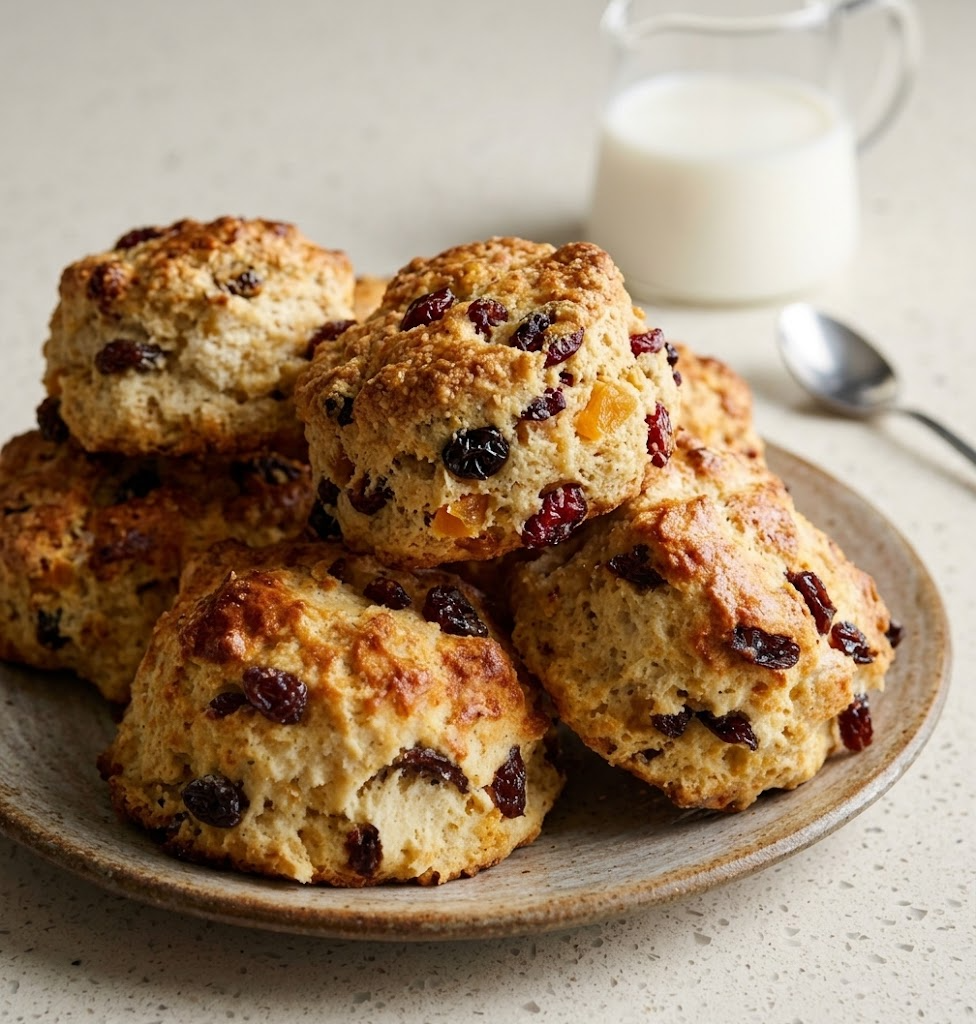
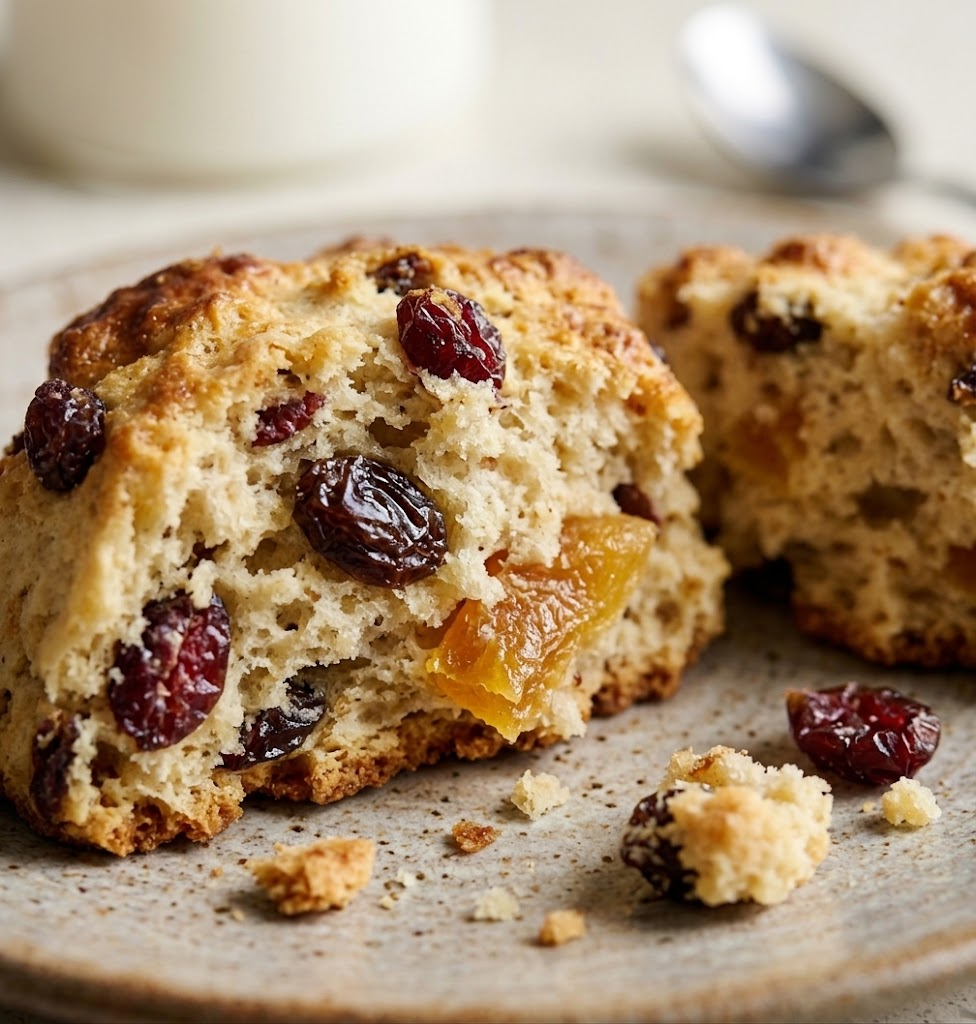
These gluten-free fruit scones are a Mary Berry-style take on the classic British bake: lightly sweet, generously studded with dried fruit, and baked until beautifully golden. The texture is tender and cake-like inside with a delicate crumb, not dry or sandy, and they split cleanly for jam and cream. They are genuinely beginner-friendly, with simple mixing and a short bake. From start to finish, you are looking at about 30 minutes.
Ingredients
For the gluten-free fruit scones
- 350g gluten-free self-raising flour blend, plus extra for dusting
- 2 tsp gluten-free baking powder
- 1/2 tsp xanthan gum (only if your flour blend does not already include it)
- 1/4 tsp fine salt
- 85g unsalted butter, cold and cubed
- 50g caster sugar
- 125g sultanas or currants
- 1 large egg
- 170ml whole milk (you may not need every last drop)
To finish and serve
- 1 to 2 tbsp milk, for brushing the tops
- Strawberry jam (or raspberry), to serve
- Clotted cream, to serve
How to Make Gluten-Free Fruit Scones
Prepare the oven and tray
- Prepare the oven: Preheat the oven to 220°C or 200°C fan. Line a baking tray with baking parchment so the scones lift easily and brown evenly.
- Get set up: Measure your ingredients before you start. Keeping the butter cold and the oven hot is what gives scones their rise.
Mix the dry ingredients and rub in the butter
- Combine the dry ingredients: In a large bowl, mix the gluten-free self-raising flour, baking powder, xanthan gum (if needed), and salt until evenly blended.
- Rub in the butter: Add the cold cubed butter and rub it into the flour using your fingertips until the mixture looks like fine breadcrumbs. Work fairly quickly so the butter stays cool.
- Add sugar and fruit: Stir in the caster sugar and sultanas (or currants) so the fruit is coated in flour, which helps prevent it sinking and sticking.
Bring the dough together
- Mix the liquids: In a jug, whisk the egg with the milk until smooth.
- Make a soft dough: Pour in most of the egg and milk mixture and use a dinner knife (or a fork) to stir, then use your hands to bring it together. If it looks dry, add a splash more milk, a little at a time.
- Keep it gentle: Gluten-free dough can go crumbly if overworked. Mix only until it holds together and looks evenly moistened.
Shape, cut, and glaze
- Pat out the dough: Tip the dough onto a lightly floured surface. Pat (do not roll) to about 2.5cm thick, keeping the top reasonably smooth.
- Cut the scones: Dip a 5cm round cutter into flour, then cut straight down and lift straight up. Avoid twisting, as it can seal the edges and reduce the rise.
- Arrange and glaze: Place on the lined tray with a little space between them. Brush the tops with milk, taking care not to drip down the sides (it can glue the layers and affect the lift).
Bake and cool
- Bake: Bake for 11 to 13 minutes, until well risen and golden on top. They should feel set when gently pressed and sound slightly hollow underneath if you lift one carefully.
- Cool: Transfer to a wire rack and leave for at least 10 minutes. Scones are easiest to split once they have cooled slightly.
Assemble and serve
- Split: Pull apart or slice the scones horizontally.
- Fill: Add jam, then a generous spoonful of clotted cream (or the other way round if that is how you do it).
Tips
Why did my gluten-free scones spread instead of rising?
This usually comes down to dough that is too wet, a tray that is warm, or an oven that is not hot enough. Keep the dough soft but not sticky, cut the scones thick, and bake in a properly preheated hot oven. If your kitchen is warm, chill the cut scones on the tray for 10 minutes before baking.
How do I stop gluten-free scones from being dry or crumbly?
Measure the flour carefully, and avoid adding lots of extra flour while shaping. A soft dough gives a lighter scone. Also, bake just until golden and set, as overbaking dries them out quickly. If your flour blend is very starchy, adding the xanthan gum (when needed) makes a big difference to the crumb.
What is the best way to get tall, neat scones?
Pat the dough to an even thickness (about 2.5cm), use a sharp cutter, and press straight down without twisting. Brushing only the tops with milk helps the sides expand upward rather than sticking together.
Can I swap the dried fruit?
Yes. Use the same weight of raisins, currants, sultanas, or mixed dried fruit. If you use larger pieces like chopped apricots, chop them small so they do not tear the dough when cutting.
Serving Suggestions
- Classic afternoon tea with strawberry jam and clotted cream
- With salted butter and a drizzle of honey while still slightly warm
- Alongside fresh berries and a pot of strong tea
- Split and topped with lemon curd for a brighter, sharper finish
Storage
Room temperature
Keep cooled scones in an airtight container for up to 2 days. For the best texture, refresh them in a 200°C (180°C fan) oven for 3 to 5 minutes before serving.
Refrigerator
You can refrigerate them for up to 4 days, but they will dry out faster in the fridge. If you do refrigerate, warm them in the oven (not just the microwave) to bring back a softer crumb.
Freezing
Freeze unfilled scones once completely cool. Wrap individually, then store in a freezer bag or airtight container for up to 3 months. Defrost at room temperature, then warm in a hot oven for 5 to 8 minutes.
Nutrition
- Calories: 235 kcal
- Carbohydrates: 40 g
- Protein: 4 g
- Fat: 7 g
- Saturated fat: 4 g
- Sodium: 220 mg
Disclaimer: Nutrition values are estimates and will vary depending on the gluten-free flour blend and portion size.
FAQs
Can I make gluten-free fruit scones with plain gluten-free flour?
Yes. Use a good plain gluten-free flour blend and add 2 tsp gluten-free baking powder. If your blend does not contain xanthan gum, add 1/2 tsp for better structure and a less crumbly texture.
Why are my gluten-free scones crumbly when I cut them?
This is usually from a dough that is too dry or too much extra flour used while shaping. Add the milk gradually until the dough holds together, handle it gently, and avoid overbaking. Xanthan gum (if your flour needs it) also helps the crumb hold.
Can I make the scone dough ahead of time?
For the best rise, bake soon after mixing. If you need to get ahead, cut the scones, cover the tray, and chill for up to 12 hours. Bake straight from the fridge in a fully preheated oven.
How do I know when fruit scones are baked through?
They should be well risen and golden on top, and they should feel set rather than doughy when gently pressed. If you lift one carefully, the base should be lightly browned and sound slightly hollow when tapped.
Can I make these dairy-free as well as gluten-free?
Yes. Use a firm dairy-free butter alternative and a full-fat plant milk (oat or soy work well). Brush the tops with plant milk before baking. Results vary by brand, but you should still get a good rise with a hot oven and thick shaping.
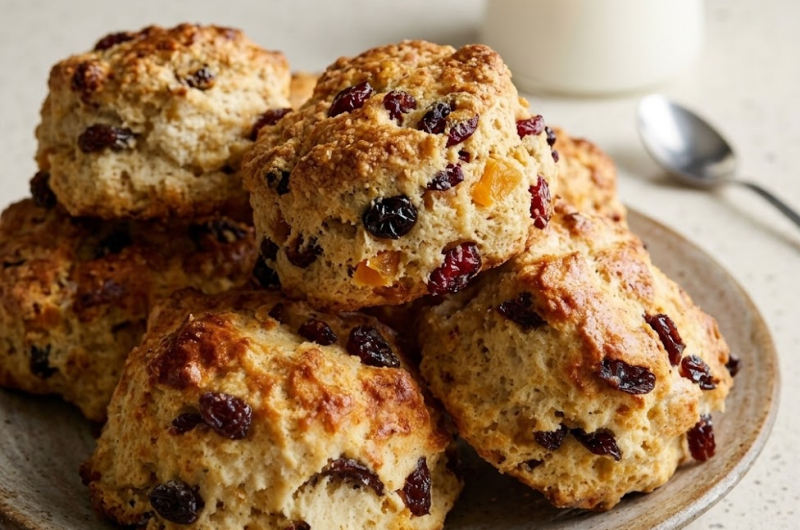
Mary Berry-Style Gluten-Free Fruit Scones
Course: Breakfast, Brunch, Afternoon TeaCuisine: BritishDifficulty: Easy10
scones15
minutes12
minutes27
minutes235
kcal27
minutesTender, lightly sweet gluten-free fruit scones with a classic British crumb and golden tops. Quick to make, easy to shape, and perfect with jam and clotted cream.
Ingredients
350g gluten-free self-raising flour blend (see notes), plus extra for dusting
2 tsp gluten-free baking powder
1/2 tsp xanthan gum (only if your flour blend does not include it)
1/4 tsp fine salt
85g unsalted butter, cold and cubed
50g caster sugar
125g sultanas or currants
1 large egg
170ml whole milk, plus 1–2 tbsp extra for glazing
Gluten-free flour, for the cutter and worktop
Strawberry jam, to serve
Clotted cream, to serve
Directions
- Heat the oven to 220°C (200°C fan). Line a baking tray with baking parchment.
- Mix flour, baking powder, xanthan gum (if needed) and salt. Rub in the cold butter until it looks like fine crumbs.
- Stir in the caster sugar and dried fruit.
- Whisk the egg with the milk. Add most of it to the bowl and mix gently to a soft dough, adding the rest only if needed.
- Pat out to about 2.5cm thick. Cut into rounds with a floured cutter and place on the tray.
- Brush the tops with a little milk. Bake 11–13 minutes until well risen and golden.
- Cool for 10 minutes, then split and serve with jam and clotted cream.
Notes
- Use a gluten-free self-raising flour blend designed for baking. If it does not contain xanthan gum, add it for better structure.
- Handle the dough gently and keep it fairly thick for a good rise.
- For best results, serve the same day. Refresh day-old scones in a hot oven for a few minutes.