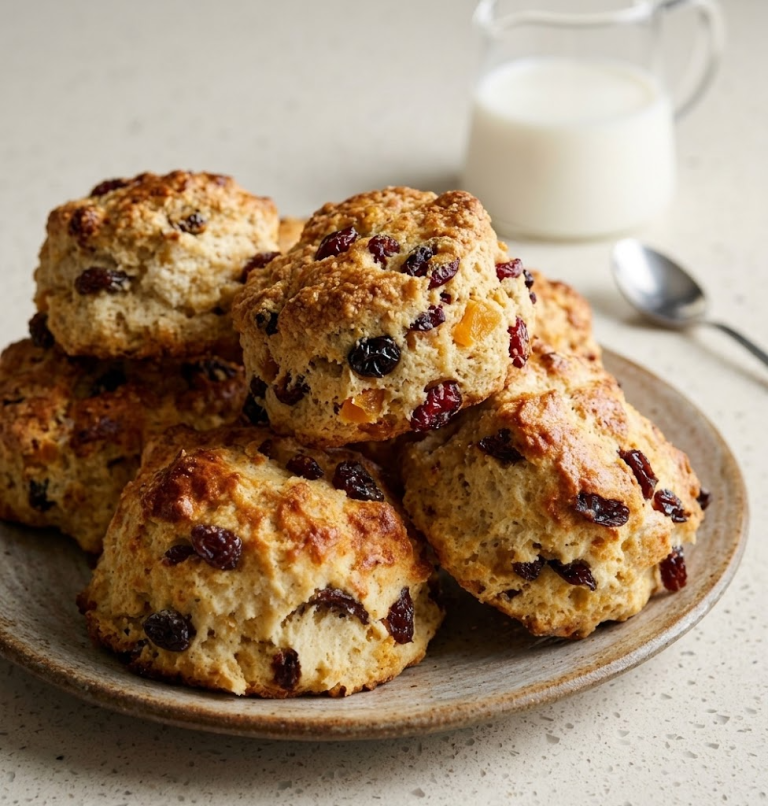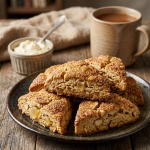

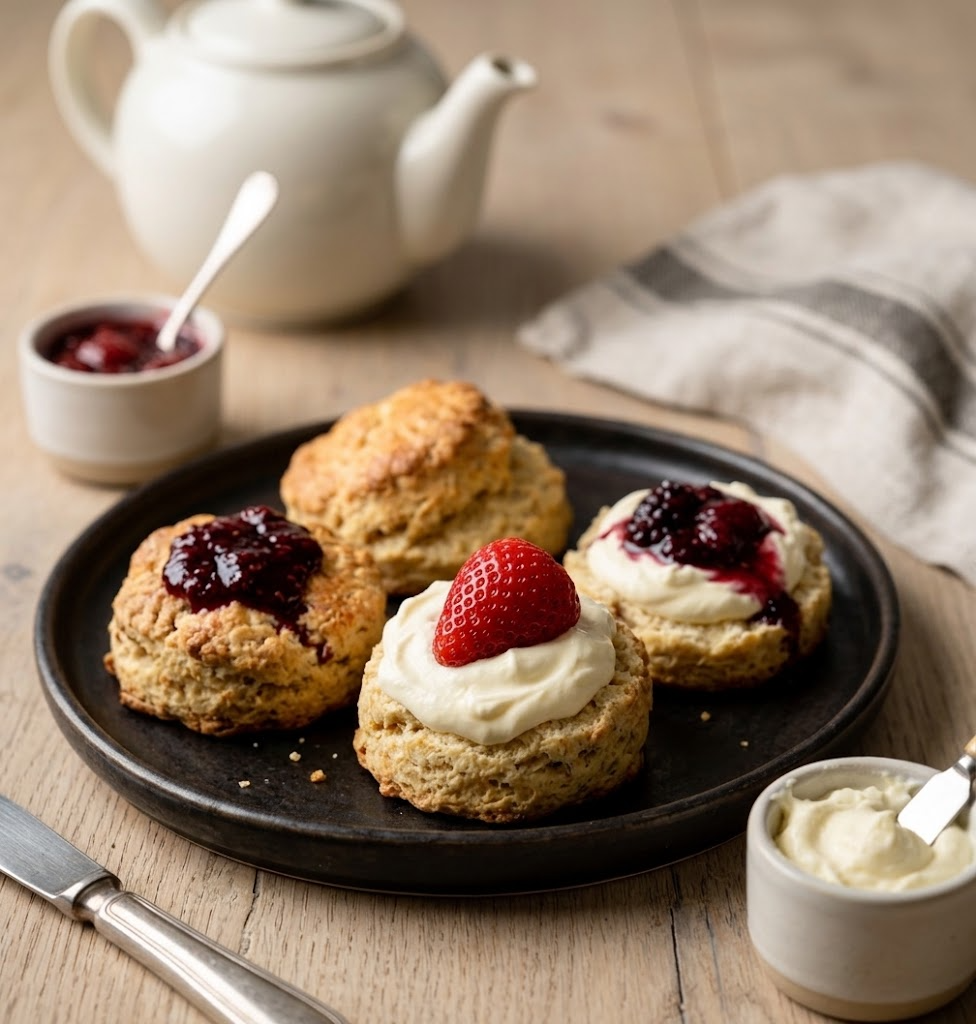
These classic Devonshire scones are everything you want for a proper cream tea: tall, tender, and lightly sweet with a delicate buttery crumb. They are easy enough for beginners, but the little details make all the difference, so I will talk you through each step clearly. Expect golden tops, soft middles, and that just-baked aroma that begs for strawberry jam and clotted cream. Total time is about 30 minutes, including a short cool down.
Ingredients
For the scones
- 450g self-raising flour, plus extra for dusting
- 2 teaspoons baking powder
- Pinch of fine sea salt
- 75g unsalted butter, cold and cut into small cubes
- 50g caster sugar
- 2 large eggs
- 200ml whole milk, plus a splash more if needed
For glazing
- 1 tablespoon whole milk
To serve (Devonshire-style)
- Clotted cream
- Strawberry jam (or raspberry jam)
How to Make Mary Berry Devonshire Scones
- Prepare the oven: Preheat the oven to 220°C or 200°C fan. Line a large baking tray with baking parchment and set it aside so you can work quickly once the dough is made.
- Mix the dry ingredients: Add the self-raising flour, baking powder, and salt to a large bowl. Whisk or stir for a few seconds to evenly distribute the raising agents.
- Rub in the butter: Add the cold cubed butter and rub it into the flour using your fingertips until the mixture looks like fine breadcrumbs. Work lightly and fairly quickly so the butter does not melt.
- Add the sugar: Stir in the caster sugar until evenly mixed. This gives a gentle sweetness without turning the scones into cake.
- Add eggs and milk: In a jug, beat the eggs with the milk. Pour most of it into the bowl (hold back a small splash) and use a dinner knife to stir and cut through the mixture until it starts to clump.
- Bring the dough together: If there are dry patches, add a tiny splash of the remaining milk mixture. Tip the dough onto a lightly floured surface and knead very gently just once or twice, only until it is smooth enough to pat out.
- Cut the scones: Pat the dough to about 2 to 2.5cm thick. Dip a 5cm round cutter in flour, then cut straight down without twisting. Place the scones on the tray with a little space between them for even heat.
- Glaze: Brush just the tops with a little milk. Try not to let glaze drip down the sides, as it can seal the edges and slightly reduce the rise.
- Bake: Bake for 10 to 12 minutes, until well risen and golden on top. They should feel light for their size and sound slightly hollow if you carefully tap the bottom of one.
- Cool: Transfer to a wire rack and let them cool for 10 minutes. Scones are best served warm, not piping hot, so the crumb can set and the butter flavour comes through.
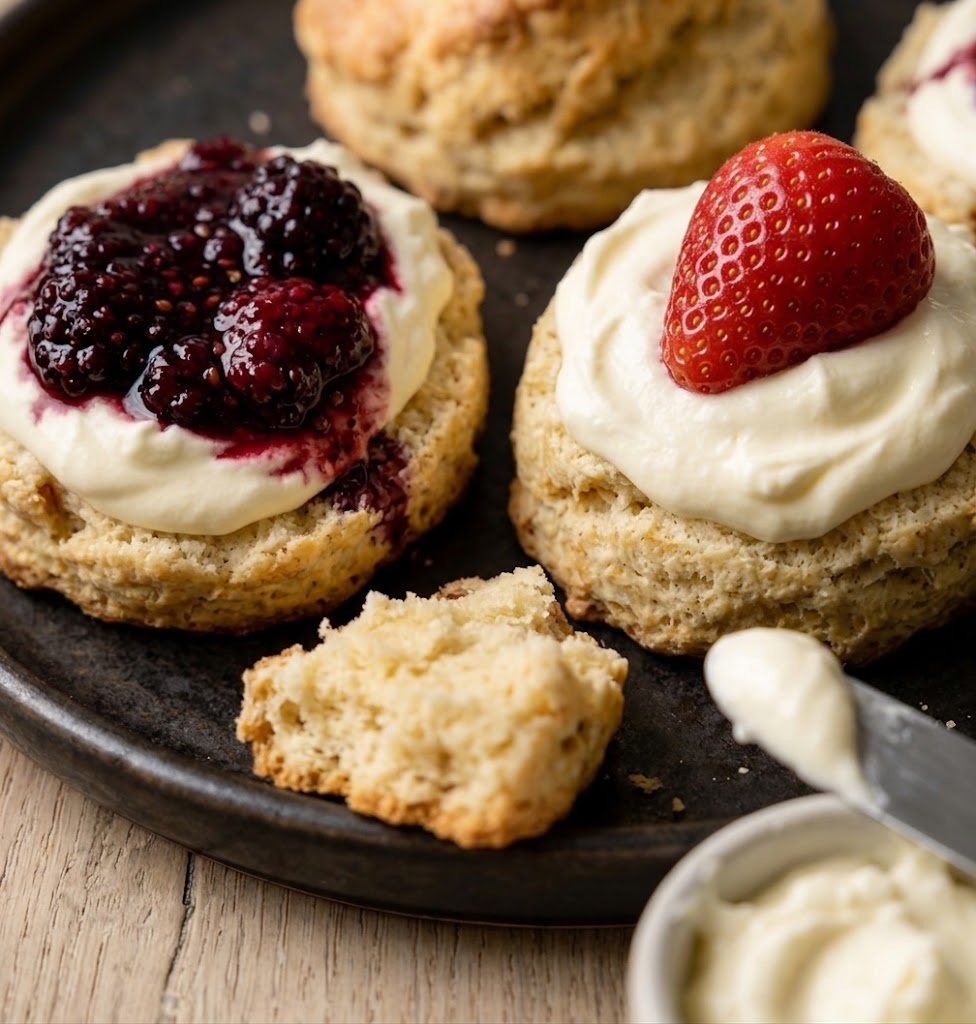
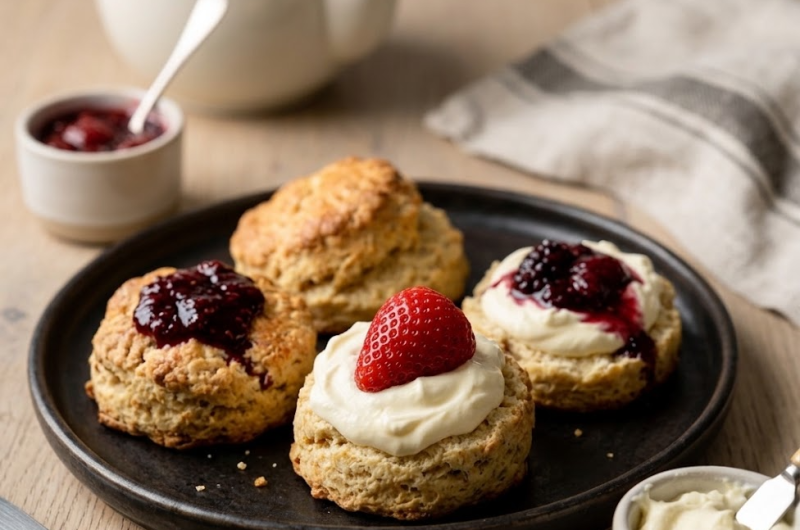
- Assemble and serve: Split each scone and top with clotted cream and jam. Serve immediately with a pot of tea.
Tips for the Best Rise and Texture
Why are my scones dense instead of fluffy?
Dense scones usually come from overworking the dough or adding too much extra flour on the work surface. Rub in the butter quickly, mix with a light hand, and knead only once or twice to bring it together. The dough should be soft, not tough or heavily floured.
How do I get tall scones with straight sides?
Pat the dough to a good thickness (2 to 2.5cm) and cut straight down with a sharp cutter. Do not twist the cutter, as twisting seals the edges and can stop the scones rising evenly.
What is the best oven temperature for scones?
A hot oven helps scones rise fast before the crust sets. 220°C (200°C fan) is ideal in most home ovens. If your scones colour too quickly, move the tray down one shelf and check your oven temperature with a thermometer.
How do I keep the tops golden without drying them out?
Brush lightly with milk and bake just until golden and set. Overbaking is what dries them out. Start checking at 10 minutes, especially if your scones are smaller or your oven runs hot.
Serving Suggestions
- Classic cream tea: clotted cream and strawberry jam
- Swap jam for lemon curd for a brighter, citrusy finish
- Serve with fresh berries on the side
- Pair with Earl Grey, English Breakfast tea, or a latte
Storage
Room temperature
Keep scones in an airtight container for up to 2 days. If they soften, warm them in a 160°C oven for 4 to 6 minutes to refresh the edges.
Refrigerator
I do not recommend refrigerating scones as it dries them out faster. If you must (for example, if filled), wrap well and eat within 24 hours, then bring to room temperature before serving.
Freezing
Freeze unfilled scones as soon as they are completely cool. Wrap tightly and freeze for up to 3 months. Thaw at room temperature, then warm in a 160°C oven for 6 to 8 minutes.
Nutrition
- Calories: 240 kcal
- Carbohydrates: 35 g
- Protein: 6 g
- Fat: 9 g
- Saturated Fat: 5 g
- Sodium: 220 mg
Nutrition values are estimates and will vary based on portion size and the brands you use, especially for clotted cream and jam.
FAQs
Can I make the scone dough ahead of time?
It is best baked straight away for the highest rise. If you need to prep ahead, measure and mix the dry ingredients and keep the butter cubed in the fridge. Combine with the liquid just before baking.
Can I use plain flour instead of self-raising flour?
Yes. Use 450g plain flour and increase the baking powder to 4 teaspoons (about 16g). Whisk very well so the raising agent is evenly distributed.
Why didn’t my scones rise evenly?
The most common causes are twisting the cutter, glaze running down the sides, or a dough that was patted too thin. Cut straight down, glaze only the tops, and keep the dough around 2 to 2.5cm thick.
How do I reheat scones without drying them out?
Warm them in a 160°C oven for 4 to 6 minutes. The microwave works in a pinch (10 to 15 seconds), but the oven keeps the outside slightly crisp.
What size cutter should I use for classic cream tea scones?
A 5cm round cutter is the traditional size and gives a nice, tall scone. If you use a larger cutter, expect fewer scones and add 1 to 2 minutes to the bake time.
Mary Berry Devonshire Scones Recipe
Course: Afternoon TeaCuisine: BritishDifficulty: Easy12
scones15
minutes12
minutes27
minutes240
kcal27
minutesLight, tall Devonshire scones with a tender crumb and golden tops, perfect for serving with clotted cream and jam.
Ingredients
450g self-raising flour, plus extra for dusting
2 tsp baking powder
Pinch of fine sea salt
75g unsalted butter, cold and cubed
50g caster sugar
2 large eggs
200ml whole milk, plus a splash if needed
1 tbsp milk, to glaze
Clotted cream, to serve
Strawberry jam, to serve
Directions
- Preheat the oven to 220°C (200°C fan). Line a baking tray with baking parchment.
- Mix flour, baking powder, and salt in a large bowl. Rub in the cold butter until it looks like fine breadcrumbs.
- Stir in the caster sugar. Beat the eggs with the milk, then add most of the liquid to the bowl.
- Bring the dough together with a knife, adding a little more milk only if it looks dry. Tip out and gently knead once or twice.
- Pat the dough to 2–2.5cm thick. Cut out scones with a floured 5cm cutter without twisting.
- Place on the tray, brush tops with milk, and bake for 10–12 minutes until well risen and golden.
- Cool on a wire rack for 10 minutes. Serve slightly warm.
- Split and fill with clotted cream and jam (however you like to do it).
Notes
- Handle the dough as little as possible for tender scones.
- For the best rise, cut straight down with the cutter and do not twist.
- Scones are at their best the day they are baked, but they freeze beautifully.